Thursday, July 30, 2009

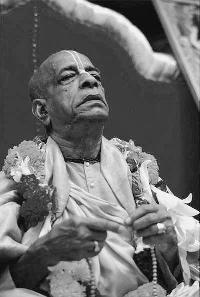
The Nectar Chronicles: Part 4


Inspired by the "Nectar of Devotion" lecture series given by His Divine Grace Srila Prabhupada from October 20-November 13, 1972 at the Radha-Damodara Temple in Vrndavana, India

All of these lectures are available for download at ISKCON Desire Tree.


Lecture #5

10-26-72

Never was there a time...the eternal gift of our individuality is that it allows us the chance to participate in the acts of loving exchange. It is these exchanges which are the fountain of meaning in our lives, and which become perfected as we enter into the spiritual atmosphere.

Today, Prabhupada mentions the importance of rasa, the taste or mellow which allows us to relish and become fully and personally involved in the activity or relationship in which we find ourselves at present.

The application of rasa can be very direct and understandable, as we see in the affection a young boy and young girl feel for each other, or it can be esoteric, as Prabhupada relates by using the beautiful but ghastly example of Bhismadeva pouring arrows into Krsna's body during the Battle of Kurukestra. Prabhupada says:

""Bhisma was also piercing His body with arrows. And Krsna was accepting the arrows move lovable than the flowers. This is the dealing. Therefore that is a rasa, ghastly rasa. Apparently it appears to be very severe, that Krsna is being pierced by the arrows. But Krsna was feeling pleasure.

So Srila Visvanath Chakravarti Thakur has explained this portion very nicely, that he has given the example of kissing. Sometimes there is hard pressure of the teeth, but still it is pleasurable. He has given this example, that although Krsna was being pierced by the arrows of Bhismadeva, still Krsna felt very pleasing."


Krsna is ready to respond to any rasa in which we want to deal with Him. These exchanges of pleasure, of love, of service, are very dynamic. It is not always just flowers. Sometimes it is arrows, although we must remember that these more esoteric rasas, including ones of lust, are only for the very advanced sadhakas.

We should simply desire to learn how to become the steady and loving servant of Krsna's devotees, and by our sincerity and determination, our original relationship, our original rasa, will be revealed in due time.

The beginning of our committment and engagement in the art of bhakti-yoga comes as we learn to control and dovetail the activities of our minds and senses in devotional service.

Prabhupada speaks that "if your mind is fixed up always in Krsna, then your senses will be also engaged in Krsna's service. Because mind is the center of all activities of the senses"

This engagement of the mind in bhakti-yoga begins with the tongue, tasting Krsna's Name and His prasadam. Prabhupada writes in the Caitanya-Caritamrta:

“‘Therefore material senses cannot appreciate Krsna's holy name, form, qualities and pastimes. When a conditioned soul is awakened to Krsna consciousness and renders service by using his tongue to chant the Lord’s holy name and taste the remnants of the Lord’s food, the tongue is purified, and one gradually comes to understand who Krsna really is.’ CC Madhya 17.136

The further effect of this is that by purifying our senses and our mental activities, we can begin to see who we actually are: the eternal spirit soul, freed from the cumbersome designations of body, mind, nation, society, family, etc that seem so natural but which yet are the very chains of our bondage to the material world.

In the Caitanya-Caritamrta we further find:

“‘Bhakti, or devotional service, means engaging all our senses in the service of the Lord, the Supreme Personality of Godhead, the master of all the senses. When the spirit soul renders service unto the Supreme, there are two side effects. One is freed from all material designations, and one’s senses are purified simply by being employed in the service of the Lord.’ CC Madhya 19.170

Simple for the simple...The key to unlocking the door of eternal answers to our persistent problems is found in the vessel of service, in selflessness and devotion to our friends and loves ones on the spiritual path, to stepping outside the doors of our temporary designations and breathing the fresh air of bhakti.

Stepping out into this sunshine means we are acting in such a way as to be seen by Krsna, and also to be seen by and to please Prabhupada himself. HH Satsvarupa Maharaja writes about this in his Prabhupada Meditations, Volume III:

"If you could be in the same place with Prabhupäda, then your reward was to see his actual lila. On the other hand, if you served him anywhere in the world, you had the advantage of actually attracting the pure devotee. By that attraction he would come to you. Prabhupäda said that we should not try to see Krsna, but act in such a way that Krsna sees us.

He gave the example of an office worker in a big company who does his job very nicely. One day the president of the company examines his file and is impressed at the man’s work. Then the president comes to that man’s desk and congratulates him. We attract Prabhupäda by carrying out his orders. Let us make our hearts pure and enthusiastic to receive him."

Prabhupada says in his lecture:

"You cannot see Krsna, but by being satisfied with your service, Krsna sees you. Just like you cannot see sun at night. But when the sun sees you, you can see the sun and yourself, both. Similarly, when Krsna sees you, being satisfied with your service, then you can see Krsna, you can see yourself and you can see the whole world."

Being able to see the whole world means being able to see the brahmana and the dog-eater with the same vision, as spirit soul, not as the outward dress.

The sincere effort to purify our senses, cleansing our hearts of material dust alongside this, is the foundational prerequisite to this kind of vision, to becoming worthy of being seen and recognized by Krsna.

Krsna can only be served in a spiritual way, therefore we must have purified senses in order to truly serve Him. Prabhupada says:

"And Krsna, being Supreme, He's Supersoul, we cannot approach with our material consciousness. Therefore the consciousness has to be changed. Then we can approach Krsna. That is Krsna consciousness movement. Unless we change our consciousness... Just like, without being fire, you cannot enter into fire.

If you simply see Krsna with your eyes, then your eyes will be purified and spiritualized. Because you are touching... Just like if you keep yourself always in touch with fire, you become warm. Warm, warm, warmer. If you put one iron rod in the fire, it becomes warm, warmer, warmer, and at last, it becomes red hot. When it is red hot, it is fire. It is not more iron rod. You touch that red hot iron anywhere, it will burn. Similarly, if you keep always in touch with Krsna, you become Krsnaized, and you can appreciate what is Krsna."

Saturday, July 25, 2009

From One Who Turned The Corner...

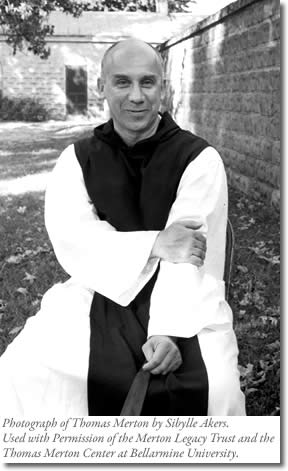
Excerpted from "The Seven-Storey Mountain" by Thomas Merton

"We refuse to hear the million different voices through which God speaks to us, and every refusal hardens us more and more against His grace-and yet He continues to speak to us: and we say He is without mercy!

'But the Lord dealeth patiently for your sake, not willing that any should perish, but that all should return to penance.'

Mother of God, how often in the last centuries have you not come down to us, speaking to us in our mountains and groves and hills, and telling us what was to come upon us, and we have not heard you. How long shall we continue to be deaf to your voice, and run our heads into the jaws of hell that abhors us?

Glorious Mother of God, shall I ever again distrust you, or your God, before Whose throne you are irresistible in your intercessions? Shall I ever turn my eyes from your hands and from your face and from your eyes? Shall I ever look anywhere else but in the face of your love, to find out true counsel, and to know my way, in all the days and all the moments of my life?

As you have dealt with me, Lady, deal also with all my millions of brothers who live in the same misery that I knew then: lead them in spite of themselves and guide them by your tremendous influence, O Holy Queen of souls and refuge of sinners, and bring them to your Christ the way you brought me.

Show us your Christ, Lady, after this our exile, but show Him to us also now, show Him to us here, while we are still wanderers."

Sunday, July 19, 2009

The Nectar Chronicles: Part 3

Inspired by the "Nectar of Devotion" lecture series given by His Divine Grace Srila Prabhupada from October 20-November 13, 1972 at the Radha-Damodara Temple in Vrndavana, India

All of these lectures are available for download at ISKCON Desire Tree.

Lecture #4
10-24-72

The Nectar of Instruction is personally one of my favorite of Prabhupada's books-so concise, lucid, and meaningful. It is a essential guidebook to bring humanity and all living entities to the highest standards of existence, brahminical culture and love of God.

From NOI #3

utsahan niscayad dhairyat
tat-tat-karma pravartanat
sanga-tyagat sato-vrtteh
sadbhir bhaktir prasidhyati

There are six principles favorable to the execution of pure devotional service: (1) being enthusiastic, (2) endeavoring with confidence, (3) being patient, (4) acting according to regulative principles (such as śravaṇaḿ kīrtanaḿ viṣṇoḥ smaraṇam [SB 7.5.23] — hearing, chanting and remembering Kṛṣṇa), (5) abandoning the association of nondevotees, and (6) following in the footsteps of the previous ācāryas. These six principles undoubtedly assure the complete success of pure devotional service.

The pillars are faith and the natural, spontaneous enthusiasm that comes from that faith. The determination to go outside of our "comfort zone" and do more than the needful for the mission of Guru and Gauranga. Prabhupada reveals this when speaking of his own life when he says:

"Our whole Krsna consciousness movement is depending on this enthusiasm. Just like I went to your country. At the age of seventy years, nobody goes out of home. But there was enthusiasm, "Yes, I must go." And because I went, there is something. You have got the information. Similarly, enthusiasm is the basic principle."

The more we show, the more we sell...the more we develop our relationship with Krsna, the more we show to Him that we are trustworthy and in the right mindset and heart-space, then the more responsibility, trust, and love He will give to us.

The NOI also spells out very clearly what we are not to do or partake in:

atyaharah prayasas ca
prajalpo niyamagrahah

janga-sangas ca laulyam ca

sadbhir bhaktir vinasyati


One's devotional service is spoiled when he becomes too entangled in the following six activities: (1) eating more than necessary or collecting more funds than required; (2) overendeavoring for mundane things that are very difficult to obtain; (3) talking unnecessarily about mundane subject matters; (4) Practicing the scriptural rules and regulations only for the sake of following them and not for the sake of spiritual advancement, or rejecting the rules and regulations of the scriptures and working independently or whimsically; (5) associating with worldly-minded persons who are not interested in
Kṛṣṇa consciousness; and (6) being greedy for mundane achievements.

One focus of Prabhupada's stern but loving unpacking of this verse to his young disciples is that we should not waste one of our most precious resources. Not water, not oil, not microchips of Gucci ad campaigns. Not money or hedge funds. This very precious resource is time. Prabhupada says:

""So we should not waste our time, a single moment. Time is very valuable. In your country, they say, 'Time is money.' So either you take money, that is artha, or paramartha. Money is required in the material world, and in spiritual world, paramartha, spiritual asset. Some way or other, even those who are materialists, they do not waste their time. So we are after spiritual realization. How we can waste our time? Time is very valuable."
Bold
As well, we should follow the regulative principles with a sense of duty, esteem, and love. Following them blindly, without any research into why one should follow them, or without any feeling of spiritual pride or connection to guru and Krsna by following them, is the not the proper mindset, and may lead to a falldown.

In this way, we can deepen the development of our loving propensity for Krsna, in who we must repose our loving feelings and sentiments in order to find the elusive sense of eternal peace whose absence rakes our human situation with so much suffering and misery.

In the preface to the Nectar of Devotion, Prabhupada writes:

"Our loving propensity expands just as a vibration of light or air expands, but we do not know where it ends. The Nectar of Devotion teaches us the science of loving every one of the living entities perfectly by the easy method of loving Krsna. We have failed to create peace and harmony in human society, even by such great attempts as the United Nations, because we do not know the right method.

The method is very simple, but one has to understand it with a cool head. The Nectar of Devotion teaches all men how to perform the simple and natural method of loving Krsna, the Supreme Personality of Godhead. If we learn how to love Krsna, then it is very easy to immediately and simultaneously love every living being."

If Krsna is at the center of our life, and all its dealings, then whatever field of activity we are in will be enhanced by being anchored to His foundation. The petty conflicts and other traps of the modes of nature will not have as much influence, if they even have any influence at all, which depends on our purity, honesty, and humility.

Prabhupada quotes Rupa Goswami when he says: "Rüpa Gosvämi says, nirbandhe krsna-sambandha. You can deal in politics. Then politics will be perfect. Krsna-sambandha, you can make a circle of scientific knowledge. Then it will be perfect. Making the center Krsna, either in politics, sociology, philosophy, religion, whatever it may be. It will be perfect."

The transformation of these material energies into a spiritual use doesn't require any external magical tricks, pay-offs, or lobbying. It is all about a change in consciousness, the essential internal change within our own being that must prelude and support any external difference to be made.

And it is so possible for all of us to be able to change our consciousness in such a way to make this difference in the world today. We have no disqualifications because of any previous position we've taken in our lives, as long as we choose now to sincerely follow in the path and the mission of the acaryas.

Prabhupada says:

"On the spiritual platform means to understand the Science of Krsna, the Supreme Spirit. Then if we are conversant with the science of Krsna, then anyone who is such enlightened, he is perfect spiritual master. It doesn't matter what he is."

"But the universality of Caitanya Mahäprabhu's movement is such that anyone can become Krsna conscious, and anyone can accept or be elevated to the exalted post of gosvämi, namäcärya."

"If one is elevated to Krsna consciousness, even he's born in the family of dog-eaters or he is a dog-eater... Of course, he cannot remain dog-eater. After coming to become a Vaisnava, he does not remain a dog-eater. But dog-eating is not disqualification. That is Caitanya Mahäprabhu's specific contribution. Nothing is disqualification to come to Krishna consciousness, provided one is serious to come to this platform."

Prabhupada further warns that we shouldn't take advantage of this unique qualification of Mahaprabhu's blessing. We must become sincere and do all we can to come to the platform of living as a qualified brahmana.

This sincerity is the foundation of any effort we make to please Guru and Gauranga. Without this sincerity, we are only a pretender.


Thursday, July 16, 2009

Hard Times Are Jamming the Ashrams

"The Himalayan Institute is one of many retreats where cash-strapped spiritual seekers can participate in work-study programs in which they pay typically $300 to $900 a month in exchange for a few hours a day of service, like washing dishes, cleaning rooms or weeding gardens.

As the unemployment rate has risen and people have sought refuge from the harsh economy, these work-exchanges have become a hot commodity. The Himalayan Institute received twice as many applications for its summer work-study programs this year as last — its August session is full, with 22 people, compared with 11 last year — and so did two similar retreats, Tassajara Zen Mountain Center in Carmel Valley, Calif., and Satchidananda Ashram in Buckingham, Va. (which is better known as Yogaville).

The people who run these programs say there seems to be a link between the troubled job market and the rising popularity of yoga retreats. Todd Wolfenberg, director of marketing at the Himalayan Institute, said he has seen an increase in applications from recent college graduates and people with professional careers. “I suspect that is due to the fact that they haven’t been able to find a job after college or are leaving a job,” he said. The center has traditionally attracted people whose lives permit extended time off, like writers and entrepreneurs."

Click here to read more from the 7/16/09 edition of the New York Times

Saturday, July 4, 2009

The Nectar Chronicles: Part 2

Inspired by the "Nectar of Devotion" lecture series given by His Divine Grace Srila Prabhupada from October 20-November 13, 1972 at the Radha-Damodara Temple in Vrndavana, India

All of these lectures are available for download at ISKCON Desire Tree.

Lectures #2 and #3
10-21-72 and 10-23-72

It was a great gift of Prabhupada's transcendental timing that his arrival in the West came during a day in which a wholesale abandoning of contemporary values by the youth of the day was catching fire.

No longer were the visions and lifestyles of good ol' ma and pa something that would give satisfaction to these driven and daring seekers-through the help of a very flavorful cosmic soup, they had begun to see through the illusions of a mass-production, mass-consumption society that had little heart to offer.

The "Leave It To Beaver" aesthetic did not compute to many of these young men and women-some of whom would become Prabhupada's dear followers. They had the inkling of a realization about the real nature of the "reality" that faced them.

In his purport to verses 11-12 from the chapter "Departure of Lord Krsna to Dvaraka" from the First Canto of the Bhagavatam, Prabhupada writes:

"Material society, friendship and love are all different phases of lust. Home, country, family, society, wealth and all sorts of corollaries are all causes of bondage in the material world, where the threefold miseries of life are concomitant factors. By associating with pure devotees and by hearing them submissively, attachment for material enjoyment becomes slackened, and attraction for hearing about the transcendental activities of the Lord becomes prominent."

Speaking to his students this evening in Vrndavana, Prabhupada is giving the sastric weight to their frustrations and revolt against the values of contemporary society. He is confirming their frustration and, more importantly, telling them how to find the real peace and happiness that will end this frustration.

How to do so is by linking up with the merciful process of devotional service, with the mission of Caitanya Mahaprabhu, by answering the plea of Lord Nityananda as he rolls in the dust before in you, straw in his mouth, begging you to become absorbed in the Holy Name.

In the preface to the Nectar of Devotion, Prabhupada writes:

"When the purified senses are employed in the service of the Lord, one becomes situated in bhakti-rasa life, and any action performed for the satisfaction of Kṛṣṇa in this transcendental bhakti-rasa stage of life can be relished perpetually. When one is thus engaged in devotional service, all varieties of rasas, or mellows, turn into eternity. In the beginning one is trained according to the principles of regulation under the guidance of the ācārya, or spiritual master, and gradually, when one is elevated, devotional service becomes automatic and spontaneous eagerness to serve Kṛṣṇa."

Clinging to the lotus feet of our spiritual master, and of all those who take it upon themselves in their mercy to guide our fragile journey into spiritual life, is the only valid ticket to the "automatic and spontaneous eagerness to serve Krsna" that is our truest birthright and most natural condition of the soul.

Saksad-dharitivena samasta sastre...The spiritual master is as good as the Supreme Person. Because he is the most humble, the most merciful representative of the Lord. He is completely qualified and completely able to give the Lord's mercy to the conditioned souls.

Prabhupada says in his lecture: "He does not think himself as spiritual master. He thinks himself their servant. Because they have to be trained. Krsna has appointed him to train them. Therefore he thinks himself as servant of the disciples. This is the position."

Prabhupada's position, his service in teaching the practical application of the Absolute Truth to his young students, was to help them understand their frustrations with the "status quo" had a deeper taste to them.

They did not want to identify with the designations of a hypocritical society based on greed and hatred. It is a craziness that the sanity of their heart's calling prevents them from giving into, and Prabhupada confirms this when he says:

"But in my opinion, every man is a crazy man." So this is a fact. This is a fact. Anyone who is under the control of the material energy, he's a crazy man. He's thinking "I am this, I am that, I am this," "I am American," "I am Indian," "I am Hindu," "I am a Muslim," "I am so on, so on, so many things." But he's nothing of all this. These are all creation of mäyä."

Real self-realization means a personal identification beyond these mere material designations. Going beyond these unhealthy identifications means going beyond hankering and lamenting, and it also means going beyond harmful conflict, destroying the very source, the ahankara, of all war and conflict.

We can share in Prabhupada's service by our eagerness to share the message of Krsna Consciousness. Our eagerness to share is the fee for the valid ticket of attachment to the lotus feet of Guru and Gauranga mentioned above. Prabhupada says in his lecture:

"A devotee should not only give respect to the devotees, but he should try to make others a devotee. That means preaching. What is the meaning of this preaching. People are engaged in material activities, and the preacher should approach them that 'You are spoiling your time, my dear sir. You become devotee of Krsna.' This is preaching. 'You are simply spoiling. You have got this human form of life, but you are utilizing like animals—eating, sleeping, mating and defending.'"

Ultimately, it is about love. It was love, after all, that the heady youth of the sixties were after in all their perverted guises and methods. It is, in fact, what we are always after in our words and deeds, but we tragically have little clue how to find the real, everlasting love of legend, fable, and fame.

Here again is where Prabhupada swoops in with the straight dope. In the preface to the NOD, he writes:

The basic principle of the living condition is that we have a general propensity to love someone. No one can live without loving someone else. This propensity is present in every living being. Even an animal like a tiger has this loving propensity, at least in a dormant stage, and it is certainly present in the human beings.

The missing point, however, is where to repose our love so that everyone can become happy. At the present moment, the human society teaches one to love his country or family or his personal self, but there is no information where to repose the loving propensity so that everyone can become happy.

That missing point is Krsna, and the Nectar of Devotion teaches us how to stimulate our original love for Krsna and how to be situated in that position where we can enjoy our blissful life."
It is a pure love, the nectar of our hearts, covered over by our moldy, rotten conditioning, that is to be uncovered by our fealty, our devotion to Prabhupada and to Krsna. By our love, our commitment in this duty, then it is the service of the acaryas to help us to uncover this original pure love in our hearts.

What is the substance of this pure love? Prabhupada says:

"In the material world field, we love somebody for getting something in return. That is not love, pure love. Pure love is different. Pure love, as it is described by Lord Caitanya, in the, in His mood of Rädhärani unto Krsna:

aslisya va pada-ratam pinastu mam
adarsanan marma-hatam karotu va
yatha tatha va vidadhatu lampato
mat-prana-nathas tu sa eva naparah


This is love, Rädhärani''s, that 'You either embrace Me or trample Me down under your feet, neglect Me, or make Me broken-hearted, not being present at any time throughout My life, life after life, it does not matter. Still I love you unconditionally.'That is real love. And that love is existing in everyone's heart."

We can reawaken this love by following in the footsteps of the great acaryas, in the methods prescribed to us by Rupa Goswami.