Tuesday, July 3, 2012

Guides, Gurus and Grounding In Our Spiritual Journey


 My latest from The Huffington Post Religion

Today is Guru Purnima, and this spiritual festival takes on a very special resonance for me this year. Just a few weeks ago, I was formally initiated into the Gaudiya Vaisnava tradition at a ceremony at our Radha-Krishna temple in Towaco, New Jersey. To be initiated in this way means to formally accept a teacher (in my case the wonderful Radhanath Swami) by offering vows of sobriety, chastity and commitment (which you can read more about here), as well as accepting a new spiritual name. (I am now Krishna Kishore Dasa, which means the servant of Krishna in his kishore or youthful age.)

During the whole ceremony, I was thinking how incredibly fortunate I am to be formally linked to such an ancient, timeless tradition. My guru or teacher is himself a representative of all of the tremendous and transcendental teachers in our line, which goes all the way back to the original teachings of Krishna Himself.

Each teacher in this line (parampara) earns his stripes, so to speak, by honestly sharing what he has been given by his/her teacher without altering or changing the essence of Krishna's original teachings. Therefore I knew my formal commitment was to a fountainhead of knowledge that was absolutely time-tested and sturdy, and beyond the vagaries of over-imagined speculations, self-serving interests or political games.

Of course, this is not to say that my tradition doesn't value the intellect or the individual expression of the practitioner. We are encouraged to understand the essence of our tradition yet apply it appropriately to the time, place and circumstances which surround us. The example of my guru's guru, A.C Bhaktivedanta Swami Prabhupada, and his historic transplanting of the Vaisnava tradition to the West in the 1960s, is an incredible example of a teacher in our line who shared the essence without corruption yet with a deft adaptation to the needs of the seekers around him.

These souls who are genuinely seeking spiritual truth and meaning are some of the most sincere, open-hearted, and open-minded individuals you can find on this lonely planet. In my experiences sharing my tradition with many of these seekers, I have had many exchanges of mutual enlightenment and enlivenment, but I have also found a certain frustration.

Many people seeking the realm of the spirit come at their quest with a sense of not being beholden to any tradition, teacher, or even a sense of the Absolute. Their journey is intensely their own, yet very much relativistic. For some this comes from innocence, and for others this is ironically a construct of reality they are firmly adhered to. In the course of our conversations they may appreciate my fidelity to my tradition, yet they remain convinced that their own spirituality can remain untethered, or at best lightly connected, to any one path, and that their imagination and intuition will be enough.

This leaves me deeply conflicted, for while indeed our spirituality is the most intimate thing we have and hold, and no one can force us to choose our proper path, I remain convinced that without accepting a distinct path and teacher who resonates with our body, mind, heart, and soul, we won't actually find the truth we are seeking.

In terms of this relativistic approach to spirituality, I am left with a number of questions. I wonder why some of us must deny the examples of great souls that have come before us? Why must some of us deny the wisdom that is there for us already, from traditions that have been part of our humanity for thousands and thousands of years? We can't really say this wisdom is not true or relevant for us and our times now, and saying so without having researched or experienced this wisdom is intellectually quite weak. You also can't deny these wisdom traditions simply because some of those who have tried to follow them have failed and often exploited others in the process. Bad seeds don't define or deny the essence of the wisdom that is there.

I should make clear that not every person who falls into this relativistic paradigm simply does their damnedest to deny all the wisdom that has come before us, but too often the tendency is to skip around this wisdom without a sense of commitment or discipline. By taking vows and being formally accepted into my own tradition, I can approach the deepest freedom of love of God by working within the structure of my tradition. I have been given shape, sense, and seriousness to my spiritual life that I wouldn't otherwise find from my own imagination or intellect.

I try to make this call as humbly as I can, and if I come across as being above your own journey, please forgive me. Generally I am quite liberal-minded when it comes to spirituality, but in this case some of my conservative colors shine. In any case, I really can't feel strongly enough that we need structure in our spiritual life, and we need a path and teachers who can guide us on our walk across the desert of our heart to our spiritual destiny with God. They have walked this path before us and they can help us to make our walk by avoiding the scorpions and snakes of our own lower nature. Without the merciful guidance of this structure, we will be inevitably lost.

The last vow I took at my initiation was to always strive to be the servant of the servants of the Vaisnavas, which means to always honor and serve all the teachers and great souls who are here before me now, and who have come before us to pass down the essence that has been given to them. To be under the shelter of all of these great souls is the solace of my spirit, for I know that the path that I walk on will take me to the goal.
 

Follow Chris Fici on Twitter: www.twitter.com/ChrisFici

Wednesday, June 27, 2012

The Barking Dog of The False Ego


 My latest essay at The Huffington Post Religion

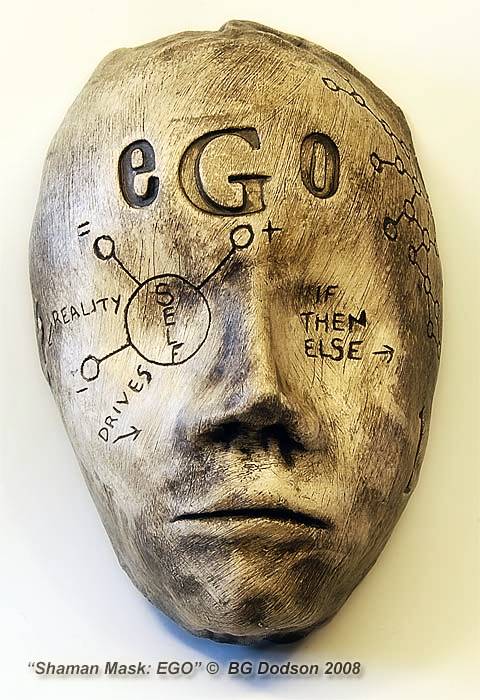
Our ego is one of the most intimidating and inscrutable realities we face in our lives. Countless philosophers, spiritualists, seekers and armchair prognosticators have tried to define its parameters and its meaning to our existence. We even have wonderful teachers -- like my friends at Gita Sutras -- attempting to actualize and excavate the nature of our ego for our most positive spiritual benefit.

Some would also rather do away with the whole idea of the ego altogether, but according to the teachings of the bhakti-yoga tradition, that is not possible. The Bhagavad-gita and countless other wisdom teachings of the bhakti tradition teach us that we are eternally individual spirit souls, currently going through a materialistic bodily experience. We always have an ego, or existence as a unique, individual being, but what we have to watch out for is our "false ego."

One of my teachers has explained the concept like this: We have two dogs in our heart. One is our actual ego, our reality as spirit soul, and one is the false ego, or our false identification with our temporary material body. Both dogs are barking to get our attention, and whichever one we pay attention to the most, or feed the most, becomes dominant in our consciousness. Or, as the Cherokee proverb says:

There is a battle of two wolves inside us all.
One is evil. It is anger, jealousy, greed, resentment, lies, inferiority, and ego.
The other is good. It is joy, peace, love, hope, humility, kindness, empathy, and truth.
The wolf that wins? The one you feed.

Our false ego disguises itself as our best friend, when it is actually our greatest adversary in our spiritual journey. It is the voice in our consciousness which makes us think we must be the center of the universe, the repose of all prestige, and when we don't get these accolades we react with all the violence of our envious, prideful, and greedy outbursts, ruining our relationships, communities, and hopes in our own search for the Divine.
At its essence, the false ego creates for us suffering, and according to the wisdom of the bhakti tradition, that is completely antithetical to our natural sense of being. As spirit souls, our substance is made of eternality (sat), knowledge (cit), and bliss (ananda), which is also the very same substance as God. Perhaps the greatest form of ananda we can experience is our direct loving relationship with God through His grace and mercy. How we gain access to this is defined by our practical understanding of our own ego-nature.

As Krishna says in the Bhagavad-gita:

If you become conscious of Me, you will pass over all the obstacles of conditioned life by My grace. If, however, you do not work in such consciousness but act through false ego, not hearing Me, you will be lost. (Chapter 18, Verse 58)

Vedic scholar Bhurijana Dasa also explains the concept of the false ego very clearly in Surrender Unto Me, his commentary on the Gita:
The false ego ... which is like a reflection of our true consciousness within matter, is the covering over the soul first supplied by material nature and is the juncture between our spiritual identity and our material existence. Any ego-identity in which we imagine ourselves the central figure is acceptable to our perverse consciousness.
Thus the soul, constitutionally Krsna's eternal servant -- full of bliss, knowledge, and eternity -- becomes attracted to the material atmosphere and conditioned by it. He is then strictly controlled by the modes of material nature and experiences the self as if it were made of temporary matter.
The juncture between our false ego and real ego is the juncture between how selfish and selfless we are in our everyday lives, both materially and spiritually. One way to see this is in relation to how we react to people's suffering. When someone suffers, do we feed the dog of our false ego by taking pleasure at their suffering, especially if it is relation to some competitive aspect of our lives, like our career, or do we feed the dog of our true ego by taking their suffering into our own heart, and feeling it as if we were the one suffering. Do we respond with compassion or contempt? Do we step on them further or do we do what we humbly can to uplift them?

Gaining access to our real sense of ego means doing all we can to develop our selfless spiritual character. This is actually our natural self, yet to be selfless in this dog-eat-dog world seems so unnatural, because we choose to absorb ourselves in the schemes of our false ego. This is why spiritual life is such a serious endeavor. We must have an everyday practice, whether it is the chanting of God's names, reading of holy scriptures, and service to our community and the less-fortunate, to help us excavate what is most dear and intimate to us, our real spiritual self.

Every moment of every day we are making a choice which dog to feed. Our spirituality begins and ends with our consciousness, so let us try to become more conscious of the very sense of self and identity we are developing in our lives together.
 

Follow Chris Fici on Twitter: www.twitter.com/@ChrisFici
FOLLOW RELIGION

Thursday, June 21, 2012

Homosexuality And Scripture

Q & A with Swami B. V. Tripurari

“Times change and with new information new opinions form, and if they are spiritually reasonable, the task for devotees is to support them with scriptural logic—sastra-yukti—or the logic that supports the essential conclusions of revelation.”

Q. Is being gay a sin?

A. I don't think that any reasonable person would consider “being gay” sinful in as much as the distinction between sexual orientation and sexual behavior is understood. Sometimes people refer to biblical passages that they say condemn homosexuality but even Christian theologians have offered plausible interpretations to the contrary. For example, regarding the often-quoted verse (Romans 1:26-27) where the apostle Paul denounced homosexual behavior as unnatural, one distinguished Christian theologian comments, “No doubt Paul was unaware of the distinction between sexual orientation, over which one has apparently very little choice, and sexual behavior, over which one does. He seemed to assume that those whom he condemned were heterosexuals who were acting contrary to nature, “leaving,” “giving up,” or “exchanging” their regular sexual orientation for that which was foreign to them. 

Paul knew nothing of the modern psychosexual understanding of homosexuals as persons whose orientation is fixed early in life, or perhaps even genetically in some cases. For such persons, having heterosexual relations would be acting contrary to nature, “leaving,” “giving up,” or “exchanging” their natural sexual orientation for one that was unnatural to them.” (Rev. Dr. Walter Wink, Professor of Biblical Interpretation, Auburn Theological Seminary)

Hindu texts, on the other hand, are relatively silent on the issue, and when they do discuss homosexuality, it is in relation to heterosexual brahmanas, or priests, indulging in homosexual liaisons. The Hindu dharma sastra describes such behavior as a minor sin; however, it is hardly possible to make a determination as to the religious status of homosexuality in today's world on the basis of a few isolated statements from the dharma sastra. Nor will mere reference to Srimad Bhagavatam's statements concerning spiritually correct “celibate householder sexuality” or the Bhagavad-gita's identification of divinity with dharmic sexuality, serve conclusively in condemning homosexuality. 

Indeed, wholesale condemnation of homosexuality on the basis of Hindu scripture is quite difficult, and given the amount of information on the subject that we have today, which was not available even fifty years ago, such condemnation would not in my opinion be spiritually correct or compassionate.

Therefore, my conviction is that monogamous homosexual relationships are as viable a position from which to cultivate spiritual life as are monogamous heterosexual relationships, and I believe that despite what my guru said decades ago, he would hold the same opinion were he with us today. Since he was with us, a wealth of insight into the nature of homosexuality has come to light, so much that any devotee would do well to carefully consider it when forming his or her opinion on the subject. 

Times change and with new information new opinions form, and if they are spiritually reasonable, the task for devotees is to support them with scriptural logic—sastra-yukti—or the logic that supports the essential conclusions of revelation.

Q. What really bothers me about today's homosexuals is how they wave their gay flag and require everybody to approve of their sexuality. Why should the world appreciate their parade of wrongly directed lust?

A. You might think differently if you were born gay and had to undergo the kind of discrimination that homosexuals have been experiencing for centuries, what to speak of the psychological trauma of “coming out” in our largely homophobic society. The fact is that homosexuality would still be a criminal offence in the United States if it were not for the courage of gay activists. Their flag waving is a cry to be allowed to be what they are without being attacked, jailed, or discriminated against, which was the norm here in America for so long. What's more, in some countries people are still being executed for homosexuality. Sexuality is a huge part of a person's life. To be forced to live in a society where one is routinely mistreated because of his or her natural occurring sexuality is something I would not would wish on anyone.

Q. I am a Hindu and I believe that homosexuals should seek reformation because scripture (the Bible) states that God is not pleased with homosexual relations. The Kama sutra states that the goal of kama, or lust, is procreation. Heterosexual relations serve this purpose but homosexual relations serve only personal sense gratification. Dharma means to accept one's duty in relation to society and God, so how could homosexuality, which has nothing to do with procreation, be considered in any way dharmic?

A. In the Hindu canon there is no condemnation of homosexuality that I am aware of. You profess to be Hindu but are unable to cite any of our scriptures to support your position, not one. Kama sutra is not scripture but it does address homosexuality without condemning it as you have done.

Ultimately everyone agrees that the sexual urge should be harnessed, and different acaryas have tried to help their students do so in different ways. In the mission of Bhaktisiddhanta Saraswati Thakura, sexual activity was supposed to be restricted to married life, but our Srila Prabhupada tried to establish a stricter standard, one that permitted sex only for the purpose of procreation. However, the vast majority of his disciples could not follow this standard. Thus in some individual cases he sanctioned sex outside of procreation for married couples. The point is that establishing a standard that students can follow and that helps them to progressively harness this desire constitutes sex that is dharmic and is thus arguably blessed—kamo 'smi. Realistically, whether one is gay or straight this would be limiting sexual activity to within a committed long-term relationship, doing so for the purpose of making advancement in spiritual life.

Furthermore, we are not concerned with trying to please God by following the complex rules of dharma because Krsna is not concerned with this. He says, sarva-dharman parityajya: “Forgo all concerns of dharma and take exclusive refuge in me. I will protect you from all reactions. Do not fear.” Spontaneous love brought about by devotion (bhakti) is the way to please Krsna, and homosexuality being a naturally occurring minority phenomenon is no more an obstacle to bhakti than is heterosexuality. Therefore, I encourage everyone regardless of their sexual orientation to become devotees of Krsna and follow in the footsteps of the residents of Vrindavana. This is the highest dharma—prema dharma.

Regarding your proposal that homosexuals seek reformation. As far back as 1948 sex researcher Alfred Kinsey attempted to document patients who had been converted from homosexuality to heterosexuality during therapy and could not find one whose sexual orientation had been changed. Later, in 1973 the American Psychiatric Association officially ceased classifying homosexuality as a disease, and today's psychiatrists and psychologists almost never attempt to change a person's sexual orientation. All this means that your notion of converting homosexuals into heterosexuals will certainly be a failure.

Finally, just try to imagine growing up and finding that when your young friends began to develop an attraction to the opposite sex you found yourself developing a sexual attraction to the same sex and had learned that you were a queer who could be justifiably beaten up and that there would be no shoulder to cry on at home. Employers (if you could get hired) would fire you if they detected your sexual attraction, which is not something that one can easily hide or that heterosexuals hide (indeed they are encouraged to celebrate it!). Then imagine that you had to pursue your sexuality in the back alley or at an illegal bar and thus ended up being the shady person that society accused you of being and gave you little opportunity of avoiding. The world is still just understanding that they did this to millions of children. Think about it.

Q. Swami, from your writing on the issue of homosexuality it appears that you want to encourage gay people to become devotees. I think that sounds broadminded but I think that the way you are doing it flies in the face of the words of your guru Srila Prabhupada, who was a great and wise man. I like to quote Prabhupada's words on the topic verbatim, and I don't think doing so is narrow-minded. What can possibly be wrong with just repeating what he said? And what he said does not jive with your approach. 

A. The difference between you and Srila Prabhupada is very great. You may repeat what he said (kind of) but you have no ability to change when new information is presented; information that is much more readily available to you than it was to him. What new information? That one born with a homosexual orientation has no choice in the matter, a fact that has come to light only in recent decades. Srila Prabhupada's views on this subject were informed by the prevailing misinformation of his time. He similarly wrote that women were less intelligent because their brain size was almost half that of men which is another piece of misinformation that he attributed to Dr. Urquhart, a professor at the institution he attended in Calcutta. However, unlike you, Srila Prabhupada was able to significantly change his position when new information was presented to him. Being incorrect at times is normal, but what's egregiously incorrect is when a person simply ignores new information and holds fast to outdated ideas despite of it.

Abraham Lincoln was also a great and wise man. He brought about the abolition of slavery in America but he also felt that black people should not be allowed to hold public office. Although once nationally accepted, this idea has in our time been internationally rejected. Still, history does not condemn Lincoln for his latter position but rather lauds him for the former—freeing the slaves. By our standards Srila Prabhupada was an even greater person; not because he held some dated views on various social issues but because he was an empowered pure devotee who was able to free sincere souls from the bondage of material existence. This is what he should and ultimately will be remembered and appreciated for, not for the few dated statements he made about homosexuality.

Q. You say that you know of no passages in the Hindu scriptures that condemn homosexuality, but in his purport to Srimad Bhagavatam verse 3.20.26 Srila Prabhupada writes: “It appears here that the homosexual appetite of males for each other is created in this episode of the creation of the demons by Brahma. In other words, the homosexual appetite of a man for another man is demoniac and is not for any sane male in the ordinary course of life.” How do you explain this?

A. The verse says that when Lord Brahma created the demons they approached him for sex but were ultimately lured away by the twilight, which appeared to them as a beautiful young woman. The text goes on to elaborate on the alluring qualities of youthful women and how attraction to them clouds the mind of the unintelligent. In that section of the Bhagavatam, only one verse mentions the demons' sexual attraction to a male, while the ten following verses elaborate on their sexual attraction to a female. Overall, the demons being discussed were obviously more sexually attracted to a woman than they were to a man (Brahma) which indicates that they were not “gay” as we understand the term today.

It is also worth mentioning that Prabhupada never backed up his stance on homosexuality with any references from scripture. Even in the purport cited, he does not say that the verse he is commenting on says that homosexuality is demoniac. Instead, using the word “appears,” which indicates a degree of uncertainty, he merely offers his own opinion. Elsewhere when discussing the subject he also only cites reasoning that demonstrates that his opinion was based on misinformation. For example, in one place he says that homosexuality is not even found in the animal world; a notion that we now know is incorrect. In this case Srila Prabhupada made an inaccurate statement in support of his position, one that he must have learned from someone else. If we are to take his words as absolute in all respects, as some devotees claim that we must, then we are forced to deny the proven fact that homosexuality is found in the animal species. If not, we must face the fact that the example given by Srila Prabhupada was mistaken. 

If the example used in support of one's reasoning is proven wrong, then one's position on the issue itself is brought into question, especially if that position is not clearly supported by scripture. So to disagree with Srila Prabhupada's opinion on homosexuality is not to pick and choose whimsically, but to do so in the very way that he taught us to do, which is to consider the issue according to sastra. In one discussion of the subject Srila Prabhupada even said, “One should take as it is enjoined in the sastras.” This is what I have done, and as I have already stated, Hindu texts are relatively silent on the issue, so it is very difficult to condemn homosexuality on the basis of sastra.

In conclusion, you have made it clear that you feel homosexual relationships established with a view to progress in spiritual life are not to be accepted in the same way that similar heterosexual relationships are. Your arguments on the subject are basically Bible-based religious fundamentalism, as you could not present any verses from Hindu scripture in support of them. As for Srila Prabhupada, if it were possible I would welcome a discussion with him on this topic and I feel confidant that in light of present times and information available he would be willing to alter his position in agreement with mine. After all, in regards to his gay disciple Upendra he did exactly that: he sanctioned a committed homosexual relationship with a view to help his disciple progress in spiritual life.

See also:
The Essence of Varnasrama Dharma

Sunday, June 17, 2012

A Case For Celibacy, Sobriety & Sanity.


Read the full version of my new article at Elephant Journal

I choose not to have sex unless my intention would be to produce a child with my wife. In all other circumstances, I strive for a complete and healthy celibacy. I choose not to take any intoxicants, not alcohol or marijuana, or even tobacco or caffeine. I choose not to gamble, to speculate whatever finances or assets I may have. I choose not to eat any meat, fish, or eggs. I’ve been a committed vegetarian for over seven years now, and I’ve even flirted with veganism on occasion as well.

You may think I’m crazy, fanatical and hopelessly out-of-touch with the natural pleasures of the body and mind that seem to be our birthrights. As a practitioner of the bhakti-yoga tradition, my community, my teachers, and my calling ask of me a commitment beyond the normal, expected and comfortable.

It certainly isn’t easy to follow these regulative principles, but by doing so, I can understand what it means to be a human being and spiritual being and all that combination entails in today’s over-driven and over-stimulated world.

Monday, May 21, 2012

A Hindu Response to Gay Rights

From the Religion section at The Huffington Post

I was personally very impressed and moved by President Obama's decision to come out openly and vocally in support of same-sex marriage. For all the guff we throw at him, and not withstanding the obvious political calculations that came along with the decision, his move was a courageous and truly historic gesture befitting the expectations that came along with his ascendancy to the presidency.
The cultural waters in terms of gay rights continue to move and shift in profound and irreversible ways.

I see this as well in the religious communities that I am part of. Recently, my friend Bowie Snodgrass, who is one of the executive directors of the excellent Interfaith community Faith House here in Manhattan, presented a sampling of the liturgy, song, and scripture she and others in the Episcopal Church have been developing for a same-gender blessings marriage ceremony. (For more information, click here to visit the Episcopal Church's "Same-Gender Blessings Project")

Still, within my own tradition (the Gaudiya Vaisnava tradition of Hinduism), and within its contemporary cultural expressions, I feel a certain hesitancy to be so supportive of gay rights. Within my own heart and conviction, there is no conflict. But I wonder how I will be perceived by my immediate and extended religious community. Nevertheless, I use this platform on The Huffington Post to bring this conflict into a brighter light, because I think it is part of the larger question of establishing and defining the relevancy of my tradition in the world today.

It is an unfortunate aspect of my experience within the Vaisnava tradition that I have experienced prejudice towards the gay community. Some of this prejudice has been overt, some of it simply a matter of cultural conditioning and unfamiliarity, but in either case, it has always made me quite uncomfortable. I had many gay and lesbian friends when I was an undergrad at the University of Michigan. I imagine I will have many gay and lesbian friends when I began grad school at Union Theological Seminary in the fall. I am naturally comfortable with people of this sexual persuasion, because of the simple fact that, beyond sexual preference, I see no difference between them and me.
Therefore when I encounter prejudice against gay people and gay culture, even if it is not with the intent of malice, it feels abhorrent in the fiber of my being and spirituality.

I feel comforted knowing there are many people of faith who feel the same way I do, and who are trying to come to grips and understand why the prejudice of homophobia can never be supported in any kind of genuine spiritual way. As always, I look to support from the timeless scriptures of the Vedas, the fount of universal wisdom. For example, in the Bhagavad-Gita, Krishna states:

The humble sages, by virtue of true knowledge, see with equal vision a learned and gentle brāhmaṇa, a cow, an elephant, a dog and a dog-eater (outcaste).

From this passage we understand a very elevated spiritual principle that calls out to our everyday experience. The fact of the matter is that prejudice of any kind has no spiritual foundation. We are called as spiritual people to apply the principles of equality, and to understand how these principles of equality can be applied in the secular world in a common-sense way, so that people do not unnecessarily suffer because of who they are, and so they can be encouraged to understand their real spiritual nature, beyond any conceptions of the physical body.
One may make an argument that gay marriage is not supported by scripture or tradition, but is homophobia ever supported by scripture or tradition? Forgive my ignorance per se if this kind of prejudicial support exists, but even within the scriptural evidence of Hindu antiquity there is plenty to support a nuanced and inclusive culture towards people of same-sex persuasion. To explore such an example, I suggest taking some time to read an excerpt from the book "Tritiya-Prakriti: People of the Third Sex-Understanding Homosexuality, Transgender Identity and Intersex Conditions Through Hinduism" by Amara Das Wilhelm, which is available at the website of GALVA (The Gay And Lesbian Vaisnava Association).

In his book, Wilhelm explores the reality of the "third sex" (tritiya-prakriti) and its various permutations as we know them today in the LGBTQ community. He reveals how individuals of the "third sex" naturally fit into traditional Hindu/Vedic culture, and how they were not excluded from traditional social customs like marriage and religious customs as well. It was an enlightening read for me, and I imagine it might be for you as well.

In future editions of this blog, I want to continue to explore the issue of prejudice against the LGBTQ community within my own tradition, and how these issues relate to and expand outwards within the spiritual quilt of our humanity. I do no want to shy away from this conflict as I see it, even if it brings upon me misunderstandings and doubts from others.
 
Follow Chris Fici on Twitter: www.twitter.com/@ChrisFici